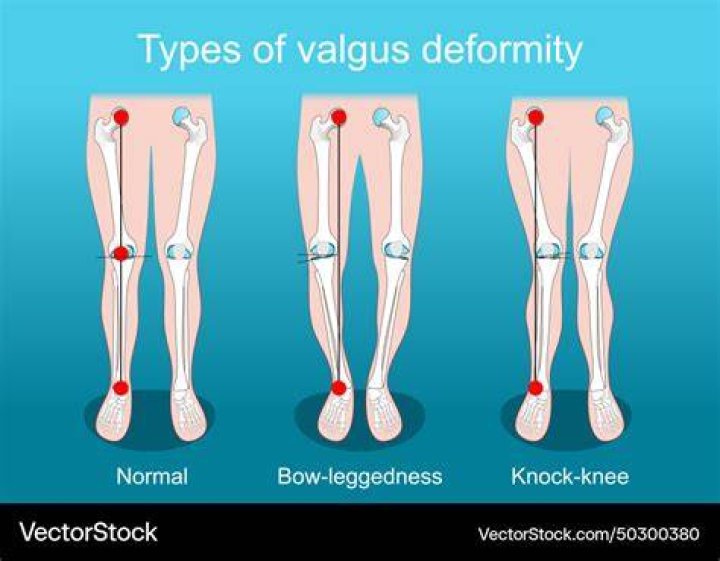
Can valgus knee be corrected?
 Daniel Hoffman
 A valgus knee is a disabling condition that can affect patients of all ages. Antivalgus osteotomy of the knee is the treatment of choice to correct the valgus, to eliminate pain in the young or middle age patient, and to avoid or delay a total knee replacement.
What is the treatment for valgus?
It appears that varus osteotomy is an effective procedure for the treatment of osteoarthritis of the knee with valgus deformity, above all in order to alleviate pain, although the operation requires precision, and correct selection of patients is of prime importance.
How do you balance a valgus knee?
In order to balance a valgus knee in extension, we first remove peripheral osteophytes and then extend the knee and distract with a laminar spreader; after this we palpate the PCL, the PLC, and the ITB with a finger or with a small Cobb elevator to identify tight structures.
Does knee valgus need surgery?
A more drastic treatment option may involve knee replacement surgery, which is more common in adult patients over age 50. Surgery can correct the Valgus deformity as well as the osteoarthritis that has accumulated in the knee joint over time. In younger patients, an osteotomy surgical procedure may be an option.
How long does it take to correct knock knees?
Around 18-20 months the knees often become knocked. This process continues up to 5 years, when the knees tend to realign. Around 10-11 years, they take the final position that will persists in adulthood.
Can you correct knock knees without surgery?
In almost all cases of genu valgum, the condition will resolve itself before a child reaches adolescence. For older children and adults, the most likely form of therapy involves stretches and exercises to realign the knees and relieve pain. Some people might find relief with orthotics or braces.
Does bracing Help knee valgus?
The knee valgus brace significantly reduced the pain by 20% in WOMAC and 15.5% in VAS compared to the baseline. Barnes et al., [27] examined 30 patients with medial knee OA for 8 weeks with knee valgus brace and indicated the pain and activity also improved significantly based on the SF-36 questionnaire.
What is flexion gap?
– Definition: – see instability following TKR. – is space between the posterior coronal cut on the distal femur & transverse cut on proximal tibia, while knee is in flexion; – effect of resection of PCL (see posterior stabilized prosthesis);
What structure preferentially impacts the flexion space more than the extension space?
The popliteus is preferentially affects flexion space more than extension space.
What is valgus deformity in total knee replacement?
Valgus deformity in total knee replacement is a much lesser encountered problem than varus deformity. The deformity can be caused by either bony or ligamentous pathology or both.
How does the tibial cut in total knee arthroplasty affect the varus alignment?
The tibial cut in total knee arthroplasty influences the varus alignment, the femoral roll-back and the tibiofemoral rotation in patients with constitutional varus Knee Surg Sports Traumatol Arthrosc.
Which cut of the tibia is most similar to the knee?
Results: Total knee replacement with a 3° and 6° varus tibia cut had the greatest varus deviation to the native knee (mean 1.6° ± 0.09°, respectively); while, knees with a 0° (mean 0.2° ± 0.01°) tibia cut were most similar to the constitutional varus knee joint.
What are the indications for tibial condylar valgus osteotomy (tcvo)?
Purpose: To describe the indications for, and surgical technique of, tibial condylar valgus osteotomy (TCVO). Indications: TCVO is commonly performed in patients with middle-to-end-stage medial unicompartmental osteoarthritis. Among the most important TCVO indication criteria are the types of tibial plateau shape.


