Can you have complex partial seizures in your sleep?
 Matthew Elliott
 Sleep seizures can happen any time you’re asleep, whether it’s during the night or a day time nap. It’s possible to have any type of seizure during your sleep including focal seizures. In focal seizures, epileptic activity starts in just a part of your brain.
What does it feel like to have a complex partial seizure?
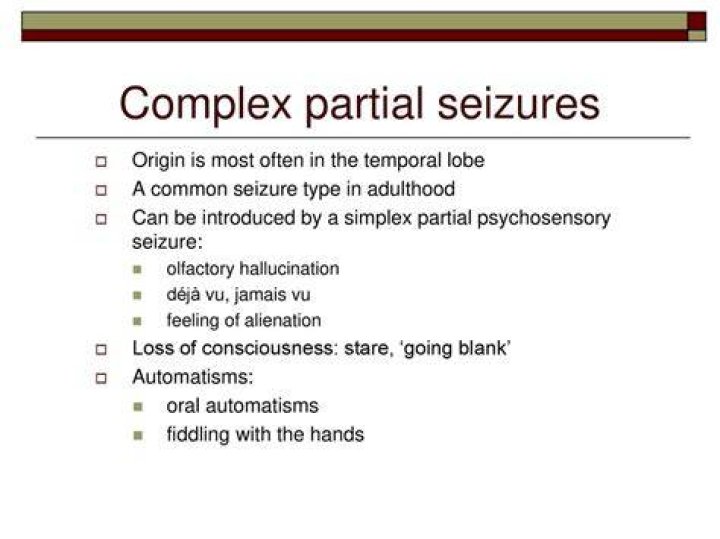
People who have a complex partial seizure are not usually aware of their surroundings while it happens. They will not respond to others or their environment, and they do not typically remember what occurs during the episode. They may stare blankly into space, appear to be daydreaming, or wake from sleep suddenly.
How do you know if you had a partial seizure?
Most of the symptoms associated with simple partial seizure are internal and only noticed by the person having the seizure. These symptoms may include: changes in how something might taste, feel, look, or sound. distorted vision of items around you or of your own body.
Which of the following is the most common affective symptom associated with complex partial seizures?
In some cases patients with affective symptoms do not realize they are having a seizure. Since fear and anxiety are the most common affective symptoms reported in TLE, it is always important to rule out this possibility during the differential diagnosis of panic disorder.
How can I tell if I had a seizure in my sleep?
During a nocturnal seizure, you may: cry out or make unusual noises, especially before muscles tense. suddenly appear very rigid. lose bladder control.
When do nocturnal seizures occur?
Nocturnal seizures can also occur when waking or stirring during the night. This generally means there are more common times at which nocturnal seizures happen: Within the first or second hour after going off to sleep (early nocturnal seizures) One to two hours before the usual time of wakening (early morning seizures)
What are signs of seizures in your sleep?
During a nocturnal seizure, a person may:
- cry out or make unusual noises, especially right before the muscles tense.
- suddenly appear very rigid.
- wet the bed.
- twitch or jerk.
- bite their tongue.
- fall out of the bed.
- be difficult to wake after the seizure.
- be confused or display other unusual behaviors after a seizure.
How do you know if you’ve had a seizure in your sleep?
How often do nocturnal seizures occur?
Some seizures occur predominantly at a certain stages of sleep. and this whole cycle occurs 3-4 times per night.
What are signs of nocturnal seizures?
Inability to Concentrate
What are the causes of night seizures?
Night seizures may be triggered by a sudden surge of fever. It’s pretty clear when this is the case because a child usually is flushed red and hot to the touch. But when there’s no obvious reason for a night seizure, the cause may be benign rolandic epilepsy (also called benign focal epilepsy of childhood).
What does a nocturnal seizure feel like?
DiagnosisEdit. People who have nocturnal seizures may notice unusual conditions upon awakening in the morning, such as a headache, having wet the bed, having bitten the tongue, a bone or joint injury, muscle strains or weakness, fatigue, or lightheadedness. Others may notice unusual mental behaviors consistent with the aftermath of a seizure.
What causes night time seizures?
Stress can affect the mental process of the brain which can, in turn, be a possible trigger for nocturnal seizures. This may include stimulants such as coffee, commonly used to overcome day time drowsiness. However, drinking too much coffee and therefore caffeine can be a possible trigger for nocturnal seizures.


