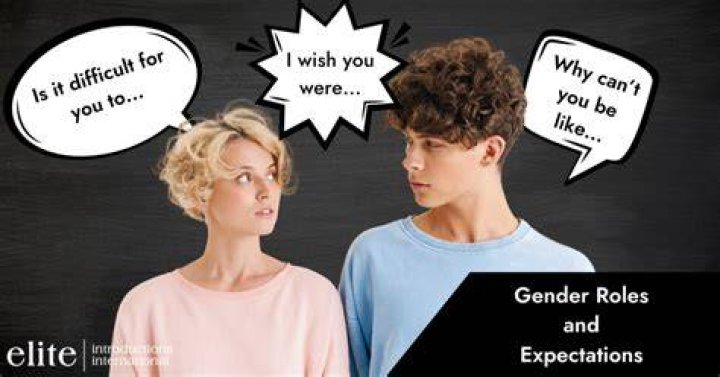
How does language affect gender roles?
 Emma Newman
 Our use of language reflects and influences perceptions of gender roles. But a body of evidence suggests that how people use gendered words, including personal pronouns, not only expresses their beliefs around gender but also shapes the way they see the social world and their place in it as a woman or a man.
How are language and gender related?
“Language and gender” refers to the relationship between the language of male and female. Gender difference is not only a reflection of the speeches between male and female, but also a reflection of their different living styles and attitudes.
What is language and gender in linguistics?
Language and gender is an area of study within sociolinguistics, applied linguistics, and related fields that investigates varieties of speech associated with a particular gender, or social norms for such gendered language use. A variety of speech associated with a particular gender is sometimes called a genderlect.
How do societal gender roles affect male and female language use and communication?
Viable cause for these language use distinctions is linked to societal expectations. Having varying roles for males and females causes confusion between the two. Ultimately, gender roles are the primary contributor in women’s perceived subordinate role, gender miscommunication, and language inequality.
What is language and gender in sociolinguistics?
• SOCIOLINGUISTICS Is The study of the effect of any and all aspects of society, including cultural norms, expectations, and context, on the way language is used, and the effects of language use on society • LANGUAGE Is a tool of communication • GENDER Is a range of characteristics used to distinguish between males and …
What language is gender?
It doesn’t have a masculine or a feminine for nouns, unless they refer to biological sex (e.g., woman, boy, Ms etc). So gendered language is commonly understood as language that has a bias towards a particular sex or social gender.
Why do languages have gender?
Languages have gender (which isn’t just about sex) because it has (had) been useful to say things about the nature of objects. The most common and natural division is animate / inanimate (not masculine / feminine).
Is there an effect of gender roles in males and females?
Having varying roles for males and females causes confusion between the two. The male role dictates that men suppress and dismiss emotions while the female role encourages and even expects women to be overly emotional (Grob, Meyers, & Schuh, 1997).
What is the importance of language and gender?
Language and gender Language and the way of speaking play a significant role on the way people reflect and position themselves in society. The way we use language and communicate indicate significantly the way we qualify ourselves on power and authority or it disqualifies us in such terms.
What is the concept of language and gender?
Language and gender is an interdisciplinary field of research that studies varieties of speech (and, to a lesser extent, writing) in terms of gender, gender relations, gendered practices, and sexuality.
Why do some languages have gender?
Basically, gender in languages is just one way of breaking up nouns into classes. Researchers believe that Proto-Indo-European had two genders: animate and inanimate. It can also, in some cases, make it easier to use pronouns clearly when you’re talking about multiple objects.
How is gender portrayed in the media?
Three themes describe how media represent gender. First, women areunderrepre- sented, which falsely implies that men are the cultural standard and women are unimportant or invisible. Sec- ond, men and women are portrayed in stereotypical ways that reflect and sustain socially endorsed views of gender.
Can the media promote gender equality in the workplace?
As such, the media can be an important actor in the promotion of gender equality, both within the working environment (in terms of employment and promotion of female staff at all levels) and in the representation of women and men (in terms of fair gender portrayal and the use of neutral and non-gender specific language). White, A. (2009).
How does the media portray the roles of men?
The media tends to demean men in caring or domestic roles, or those who oppose violence. Such portrayals can influence perceptions in terms of what society may expect from men and women, but also what they may expect from themselves. They promote an unbalanced vision of the roles of women and men in society.
What are the gender roles created in advertising for men?
Most advertising geared towards men that features a woman puts forth these views. However, these gender roles created in advertisements are not just negative for women. There is also stereotypical roles created in the ads for men such as the idea that men are lazy and misogynists.


