What does Raman shift depend on?
 Emily Phillips
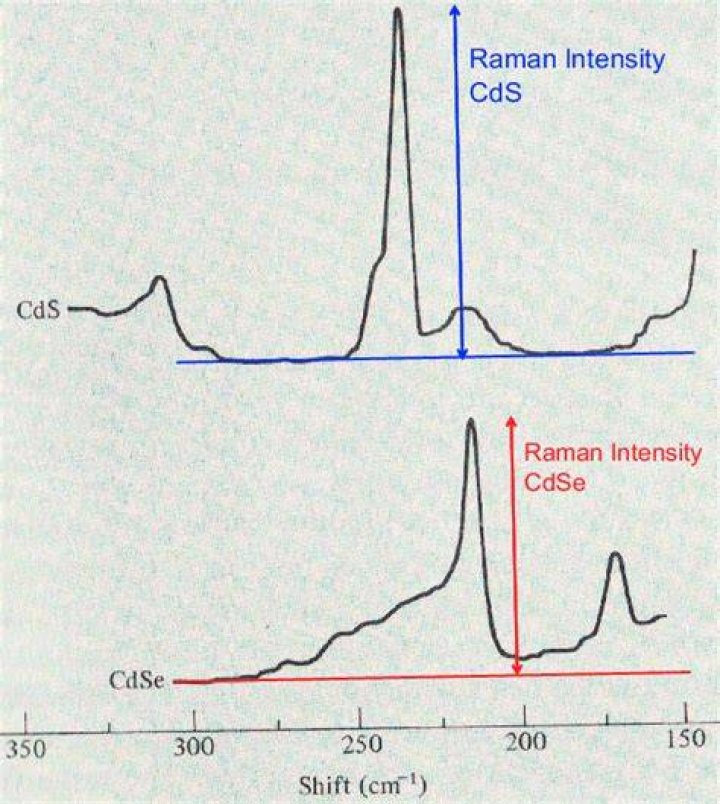
 Raman shift depends on molecular energy level of the scatterer. Different molecular energy levels produce different Raman shift for same incident wavelength.
What are the conditions for a molecule to be Raman active?
For a molecule to exhibit a Raman effect, there must be a change in its electric dipole-electric dipole polarizability with respect to the vibrational coordinate corresponding to the rovibronic state. The intensity of the Raman scattering is proportional to this polarizability change.
How Raman effect is used in Raman Spectroscopy?
RAMAN SPECTROSCOPY. The Raman effect involves scattering of light by molecules of gases, liquids, or solids. The Raman effect consists of the appearance of extra spectral lines near the wavelength of the incident light. The Raman lines in the scattered light are weaker than the light at the original wavelength.
Is Graphene Raman active?
The Raman active mode has been observed in 1LG and graphite at ∼1582 cm−1, the so-called G mode. The G band is associated with the doubly degenerate (longitudinal optical (LO) and in-plane transverse optical (TO)) phonon mode (E2g symmetry) at the BZ center and is a characteristic peak of graphene-related materials.
What is meant by Raman shift?
The Raman shift is the energy difference between the incident (laser) light and the scattered (detected) light. This difference is then only connected to the energetic properties of the molecular vibrations studied and hence independent of the laser wavelength. The Raman shift is usually expressed in wavenumbers.
What are Raman active modes?
The Raman shift depends on the energy spacing of the molecules’ modes. However not all modes are “Raman active” i.e. not all appear in Raman spectra. For a mode to be Raman active it must involve a change in the polarisability, α of the molecule i.e.
Where is Raman effect used?
Raman spectroscopy is used in many varied fields – in fact, any application where non-destructive, microscopic, chemical analysis and imaging is required. Whether the goal is qualitative or quantitative data, Raman analysis can provide key information easily and quickly.
What is D peak in Raman?
We have studied the D peak in the Raman spectrum of polycrystalline graphite as a function of excitation energy in the range from 1.16 to 4.3 eV. The D peak disperses with excitation energy (≈50 cm−1/eV) and its intensity decreases with increasing laser energy.
What is D and G peak in Raman Spectroscopy?
The G peak is due to the bond stretching of all pairs of sp2 atoms in both rings and chains. The D peak is due to the breathing modes of sp2 atoms in rings [13,26,34].
What is the basic concept of Raman effect?
Raman effect, change in the wavelength of light that occurs when a light beam is deflected by molecules. When a beam of light traverses a dust-free, transparent sample of a chemical compound, a small fraction of the light emerges in directions other than that of the incident (incoming) beam.