What is wine fermentation process?
 Emma Martin
 Fermentation is the process by which grape “must” (a fancy winemaking term for unfermented grapes or juice) transforms into wine. During fermentation, yeast—our microbiological friends—convert grape sugars into alcohol. There’s a lot more than just alcohol production going on, though.
What is the wine making process called?
vinification
Winemaking or vinification is the production of wine, starting with the selection of the fruit, its fermentation into alcohol, and the bottling of the finished liquid. The history of wine-making stretches over millennia. The science of wine and winemaking is known as oenology. A winemaker may also be called a vintner.
What is the life cycle of wine?
Making wine is a long, slow process. It can take a full three years to get from the initial planting of a brand-new grapevine through the first harvest, and the first vintage might not be bottled for another two years after that.
How do you start a wine fermenter?
Put the starter in a cozy spot at 70° to 75°F. You should see some activity within 12 to 18 hours. You will want to pitch the wine starter into the stuck fermentation right after you see the level of foaming in the jar peak. This will usually be around 1-1/2 to 2 days.
What are the steps involved in the process of making wine?
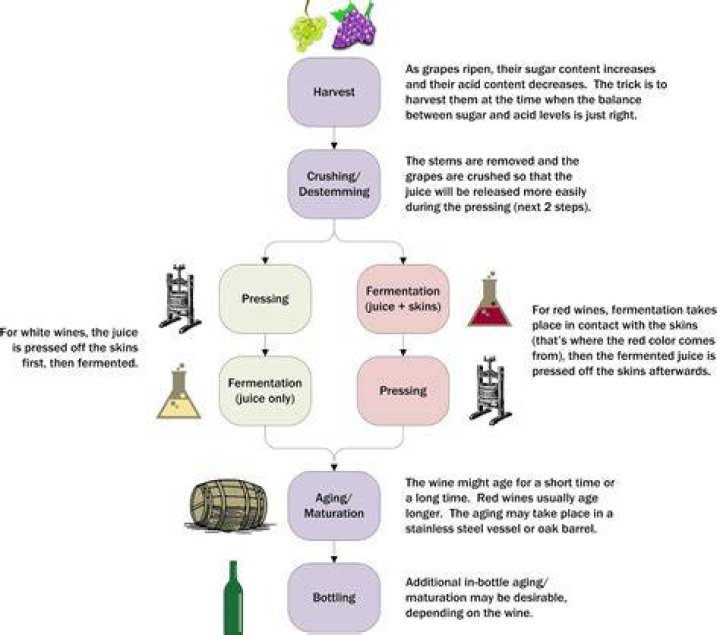
There are five basic stages or steps to making wine: harvesting, crushing and pressing, fermentation, clarification, and then aging and bottling.
What is the history of winemaking?
Wine making has been around for thousands of years. In its basic form, wine production is a natural process that requires very little human intervention.
How are grapes made into wine?
Once the grapes arrive at the winery, reputable winemakers will sort the grape bunches, culling out rotten or under-ripe fruit before crushing. Crushing the whole clusters of fresh ripe grapes is traditionally the next step in the wine making process.
What is the maturation process for wine?
Maturation Process Racking over Take wine off the top and place into another vessel – leaving the “lees” or sediment (dead yeast, seeds, grape solids) • Most reds (some whites) put into Oak barrels for barrel maturation •Coopers cut oak staves and construct barrel


