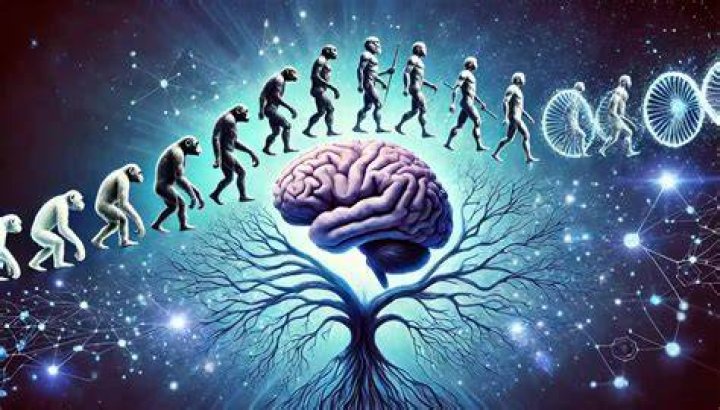
Why is evolutionary psychology wrong?
 Matthew Elliott
 A frequent criticism of evolutionary psychology is that its hypotheses are difficult or impossible to test, challenging its status as an empirical science. They allege that evolutionary psychology can predict many, or even all, behaviours for a given situation, including contradictory ones.
How do behaviorists explain behavior?
Behaviorism focuses on the idea that all behaviors are learned through interaction with the environment. This learning theory states that behaviors are learned from the environment, and says that innate or inherited factors have very little influence on behavior.
How does evolutionary psychology explain human behavior examples?
At its most basic level, evolutionary psychology explains skills that we consider to be relatively simple and common to most humans, such as language. Evolutionary psychologists may argue that advanced language skills contribute to a person’s safety, survival, and reproduction.
How does evolutionary psychology explain aggression?
Evolutionary explanations of aggression suggest that aggression serves an important function in terms of both individual survival as well as reproductive potential. This means that aggression has an adaptive purpose because it facilitates survival and adaptation to the environment.
How do behaviorists view the unconscious?
This is an example of the behaviorism theory that psychologist John Watson came up with and argued against the structuralists. This theory means that all behavior is learned and stems from unconscious motivation. Behaviorism claims that consciousness is neither a definite nor a usable concept.
How does evolutionary psychology explain social behavior?
Evolutionary Psychology Approach Psychological abilities, such as reading others’ intentions, making friends, and gaining trust, are known to help a person throughout life. Evolutionary psychologists believe that these skills are rooted in deeply complex neural circuits in the brain and that they are inherited.
How does evolutionary psychology explain behavior tendencies?
Evolutionary psychologists seek to understand how our traits and behavior tendencies are shaped by natural selection, as genetic variations increasing the odds of reproducing and surviving are most likely to be passed on to future generations.
What is the deal with evolutionary psychology?
Evolutionary psychology is founded on several core premises: The brain is an information-processing device, and it produces behaviour in response to external and internal inputs. The brain’s adaptive mechanisms were shaped by natural selection. Different neural mechanisms are specialized for solving problems in humanity’s evolutionary past.
Does evolutionary psychology have any problems?
a. Genetic Determinism. One of the most often heard criticisms is also one of the least convincing.
What are the principles of evolutionary psychology?
The evolutionary principle is a largely psychological doctrine formulated by anthropologist Claude Levi-Strauss which roughly states that when a certain species is removed from the habitat which it evolved in, or that habitat changes significantly within a brief period, the said species will develop aberrant and maladaptive behavior.
What are examples of evolutionary psychology?
One example of evolutionary psychology is the way anxiety has increased through the course of history. Anxiety is one of the psychological mechanisms that started out as a way for humans to survive and reproduce. When a predator showed up, the human’s body and mind would rush to prepare for fight or flight.